
The laboratory's work is organised around four directions. They share a common method: build reaction chemistry that is detailed enough to be predictive, validate it against measurement, and then use it to answer a design question about an engine or a process plant.

01

Soot formation and particulate emissions

Soot begins as gas-phase aromatic molecules and ends as a solid particle that carries trace metals into the air we breathe. We study that whole path: how polycyclic aromatic hydrocarbons grow, in particular the role of five-membered rings in converting acenaphthylene to pyrene and phenanthrene; how the resulting particles are structured internally; and how fuel composition changes both the amount and the character of the soot produced.

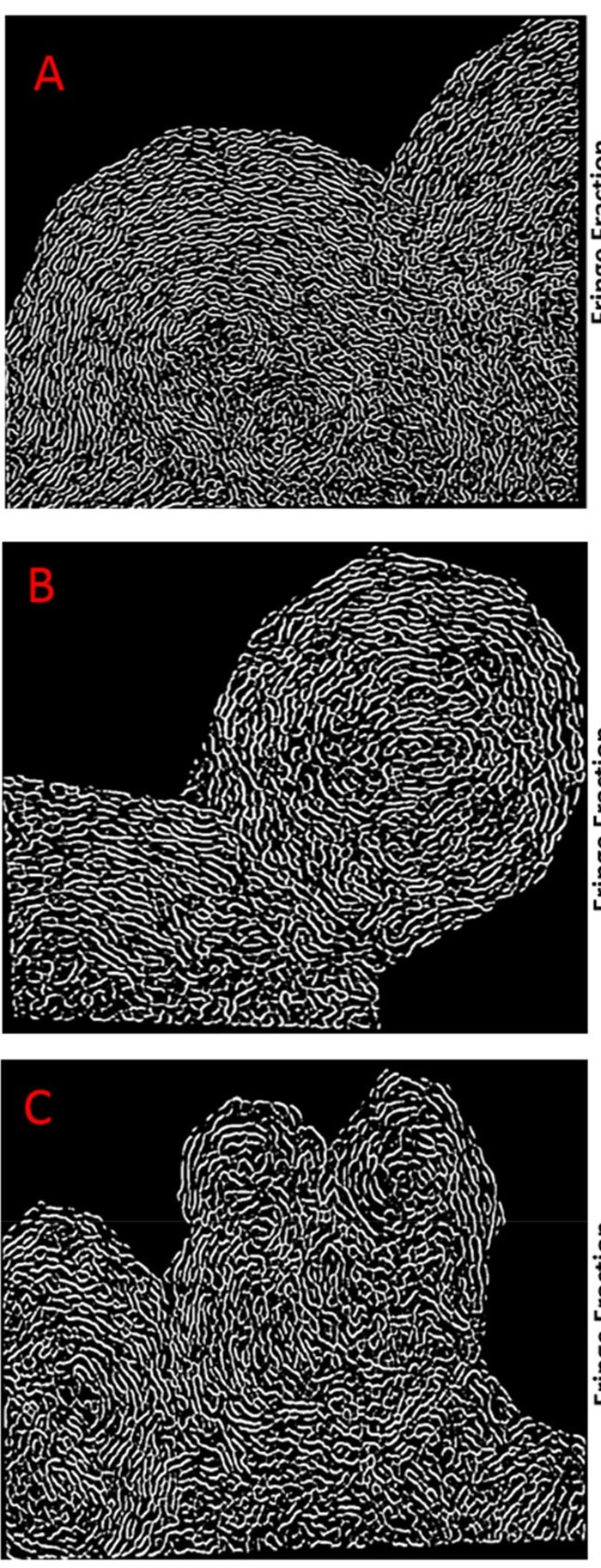
Experimental work uses electron microscopy and image analysis to relate nanostructural disorder in soot back to the fuel and additive it came from.
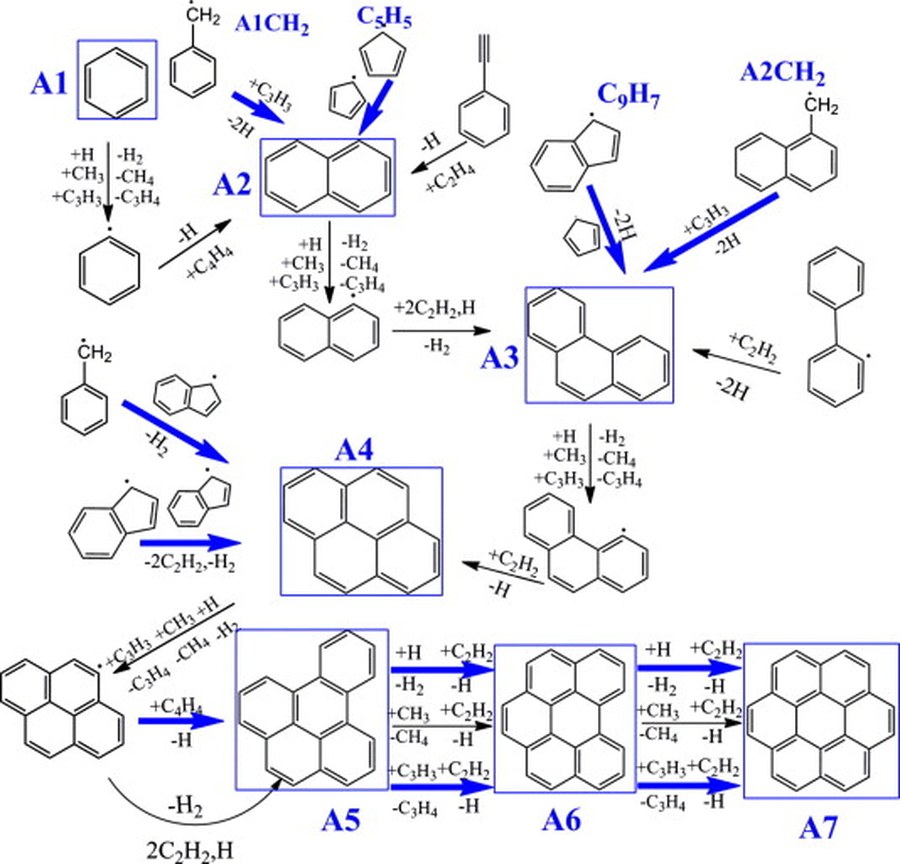
Computed reaction pathways for PAH growth from benzene (A1) up to seven-ring species (A7), showing the radical and molecule additions responsible for each step.
Fringe analysis of HRTEM images of soot from three fuels. Shorter, more curved fringes indicate greater nanostructural disorder and a more reactive particle.
02

Acid gas processing and sulphur recovery

Sour gas streams have to be processed before the gas can be used, and the chemistry inside a Claus furnace is neither simple nor well described by global rate expressions. The group has developed detailed reaction mechanisms for H2S and other sulphurous species, and for elemental sulphur combustion in sulphuric acid plant furnaces.

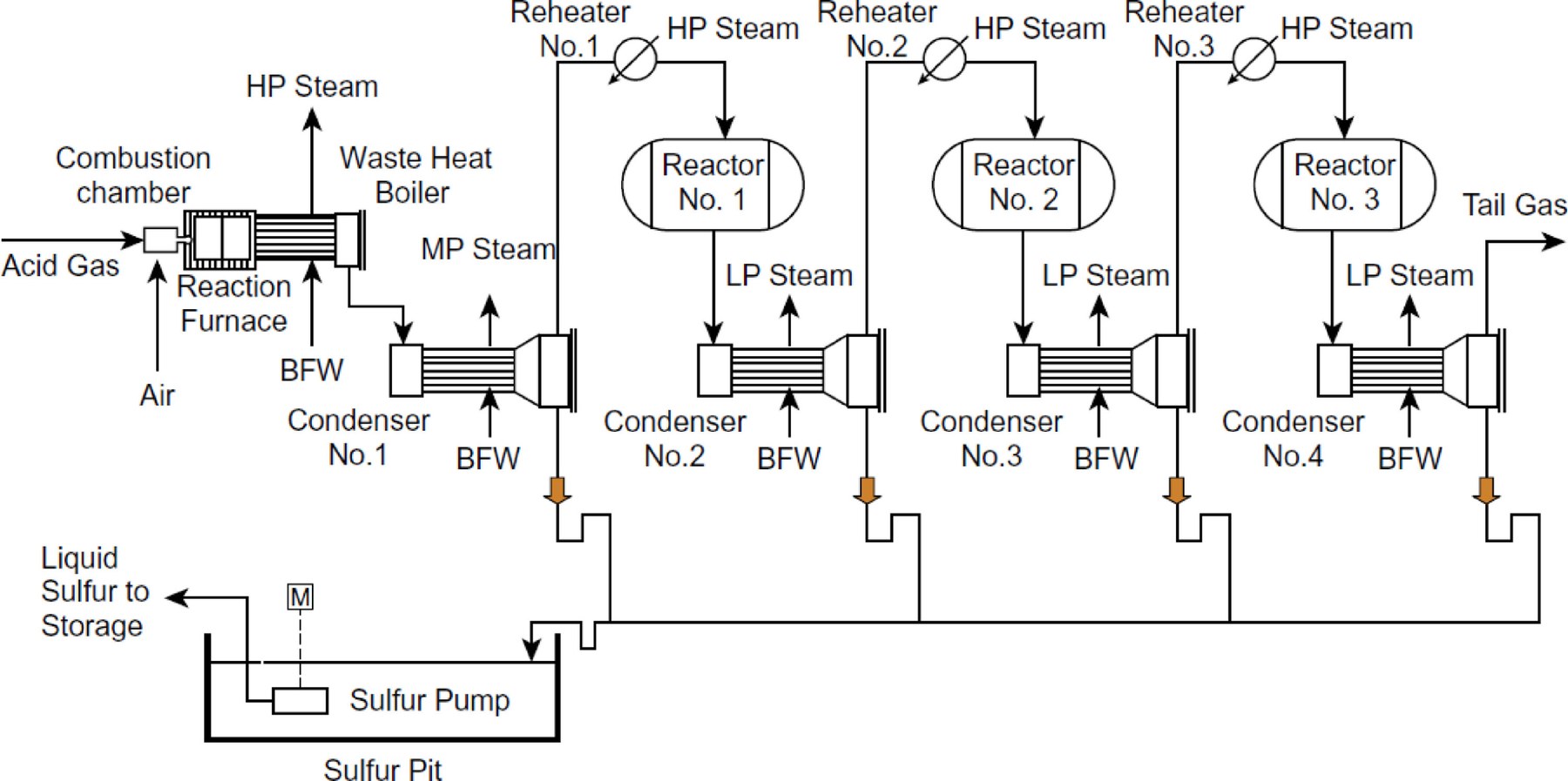
That kinetics work feeds directly into process design: split-flow configurations that destroy aromatic (BTEX) contaminants, routes for utilising lean acid gas efficiently, and heat integration schemes for an operating sulphur recovery unit.

A straight-through sulphur recovery unit: reaction furnace, waste heat boiler, and three catalytic reactor/condenser stages recovering high, medium and low pressure steam.
03

Hydrogen and syngas from waste gas

Acid gas is usually treated as a disposal problem. Thermally decomposing it recovers hydrogen instead, and the yield depends sharply on furnace conditions and on contaminants such as ammonia. We model these furnaces with detailed chemistry to find operating windows where hydrogen recovery becomes worthwhile.

A related line integrates sulphur combustion with a conventional Claus unit so that the heat and the chemistry of the two processes reinforce each other, raising hydrogen output without a separate reformer.

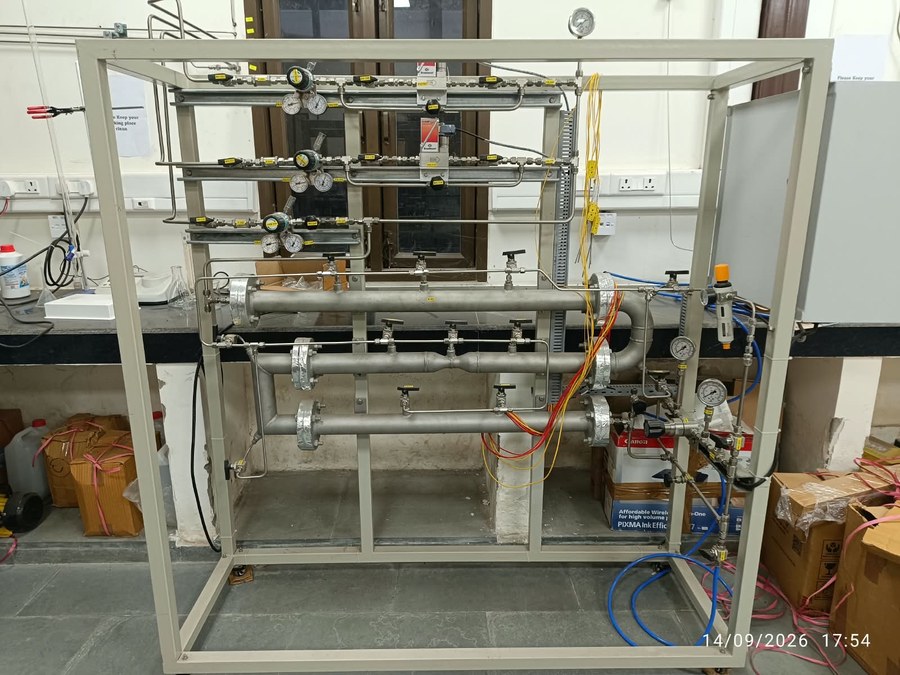
The laboratory's hydrogen-blending and gas-mixing rig, used to prepare controlled hydrogen/natural-gas mixtures for pipeline and combustion studies.
04

Alternative, oxygenated and surrogate fuels

Fuels are changing faster than the models used to describe them. The group characterises how biofuels and oxygenates — alcohols, ethers, and terpenes such as α-pinene — alter ignition delay, cetane number and sooting tendency when blended into conventional diesel or gasoline.

Work here combines shock tube and rapid compression machine data from the literature with kinetic simulation of surrogate blends, so that a candidate blend can be screened before it is ever run in an engine.

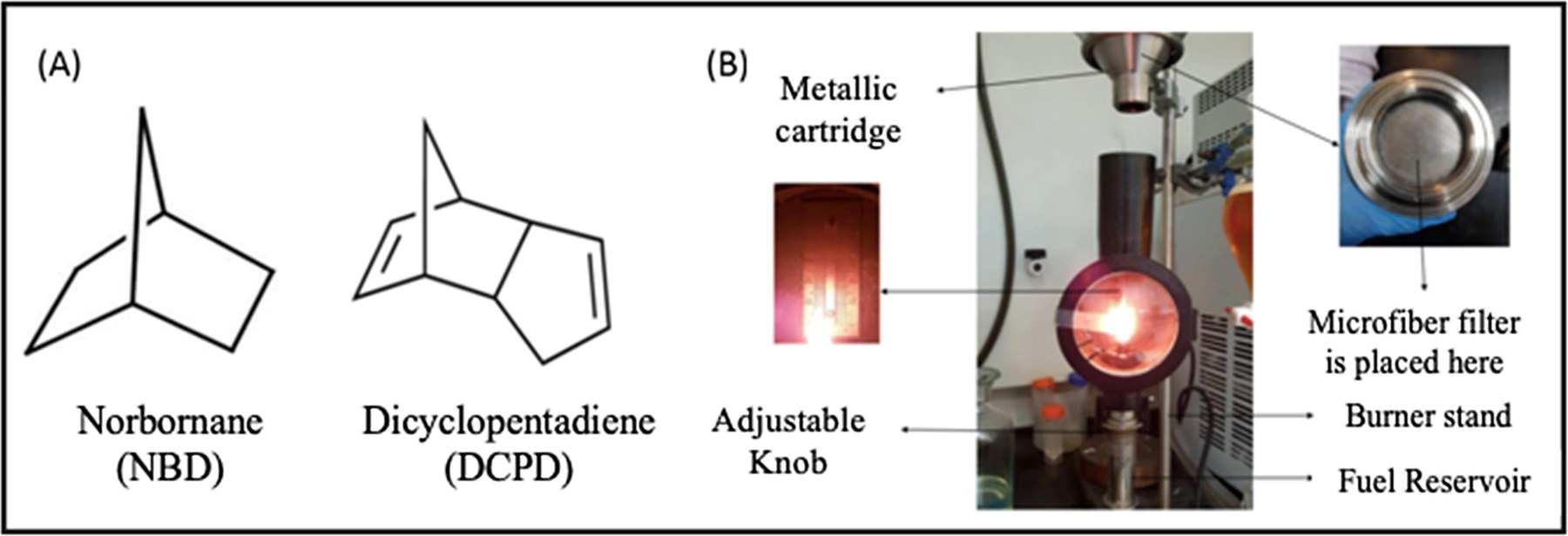
Left: two bicyclic diesel additives, norbornane and dicyclopentadiene. Right: the wick-fed diffusion burner used to generate and collect soot from candidate blends.
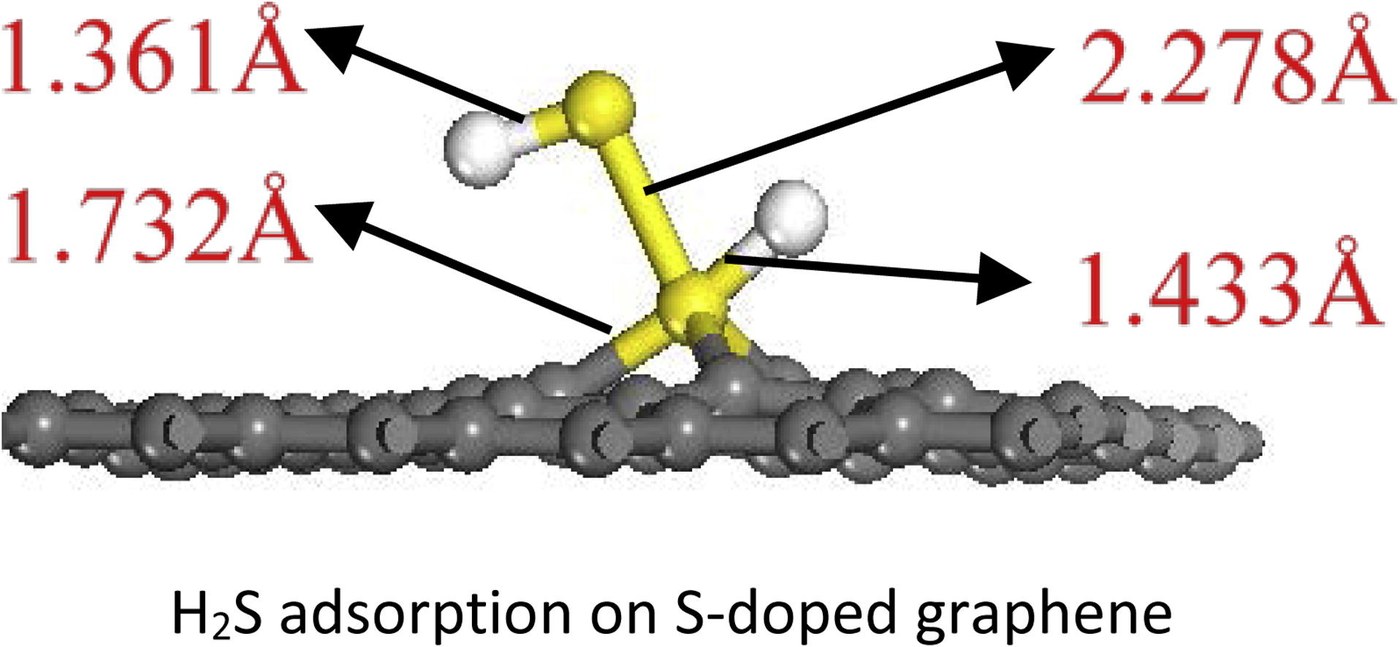
Density functional theory model of an H2S molecule adsorbed on sulphur-doped graphene, with computed bond lengths.
Computational chemistry also has a place in the group's work: a density functional theory model of H2S adsorption on sulphur-doped graphene, used to understand adsorbent design for acid gas treatment.
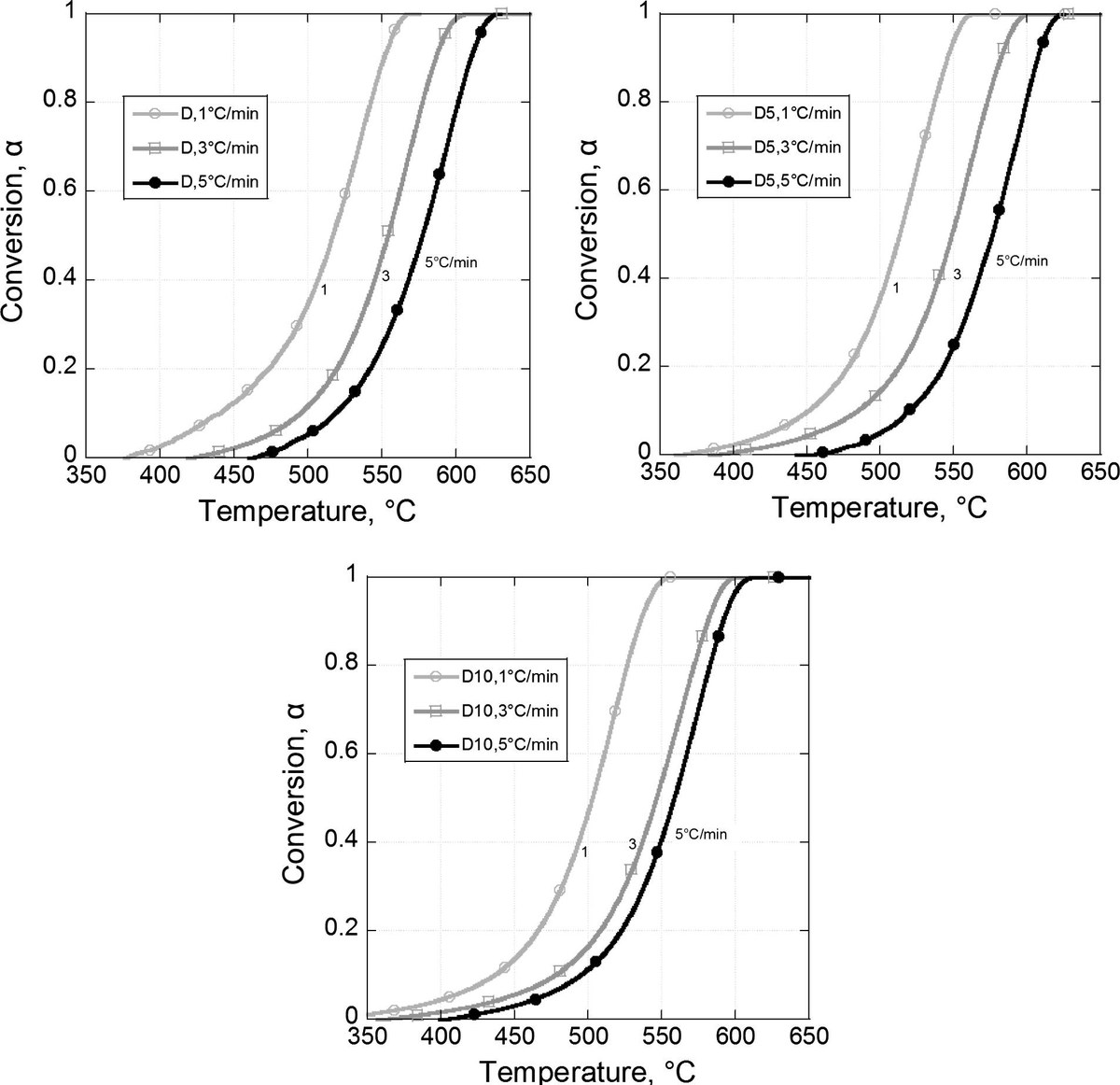
Conversion of soot versus temperature at heating rates of 1, 3 and 5 degrees Celsius per minute, for neat diesel and for two blends.
A representative result: temperature-programmed oxidation of soot from neat diesel and from two blends, at three heating rates. Shifts in the conversion curve show how an additive changes the reactivity of the particles an engine emits.

Methods and approach

Kinetic mechanism development

Constructing and reducing detailed reaction mechanisms, with thermochemistry and rate constants drawn from theory and from the literature.

Reactor and process simulation

Zero- and one-dimensional reactor models, furnace models and full flowsheet simulation of sulphur recovery and hydrogen production units.

Particle and surface characterisation

Electron microscopy and image analysis of combustion-generated particulate matter, alongside density functional theory calculations on reactive surfaces.